Indiana Fishing License and Regulations
DNR license prices, who is exempt, the 18 statewide rows and the rules that change on single waters.
 For weighing a catchPiscifun Lip gripper with digital scale27% OFFSale $39.99
Photo of Aurora: David Wilson, CC BY 2.0
Who has to carry an Indiana fishing license
With a few exceptions, a valid fishing license issued by the Indiana Department of Natural Resources is required to fish in public lakes, streams, rivers, tributaries, and boundary waters in Indiana. An individual may not take another individual sport fishing for hire on public waters, including boundary waters like Lake Michigan, without a fishing guide license. A licensee must hold an ink-signed copy of a license while fishing. Signed electronic copies are also acceptable. You must present the license to an Indiana Conservation Officer (or any other authorized law enforcement official) upon request. There are fines and penalties for fishing without a license.
To legally fish for or take trout and salmon from public waters, you must have a valid trout/salmon stamp and a valid fishing license.
To qualify for resident fishing licenses, a person must have established a true fixed and permanent home and primary residence in Indiana for 60 consecutive days prior to purchasing a license or permit and may not claim residency for fishing, hunting, or trapping in another state or country. All other people are considered nonresidents.
Requirements as printed in the 2026-2027 Indiana Fishing Regulations Guide license section, read November 5, 2026.
Hoosiers and visitors who fish without a license
A fishing license and trout/salmon stamp are not required for: Indiana residents born before April 1, 1943. Such residents should carry their valid Indiana Driver's License or other identification to verify age and residency. Residents and nonresidents under age 18. Residents who are legally blind. Proof of being legally blind is not required while fishing. Residents of a state-owned mental rehabilitation facility. Residents of any licensed health care facility in Indiana taking part in a supervised fishing activity sponsored by the facility. Residents who have a developmental disability as defined by IC 12-7-2-61. Proof of the disability is not required while fishing. Fishing in a private pond that does not allow fish entry from or exit to public waters. An angler must have permission from the property owner to fish in that pond. Resident owners of Indiana farmland, resident lessees of Indiana farmland who farm that land, and the spouses and children living with them while hunting, fishing, or trapping on the farmland they own or lease. This exemption does not apply to land owned by a business, corporation, or partnership unless the shareholders, partners, members, or owners are composed solely of the members of an immediate family. Farmland means agricultural land that is devoted or best adaptable to the production of crops, fruits, timber, or the raising of livestock, or is assessed as agricultural land for property tax purposes. There is no acreage requirement to qualify for this exemption. Some nonresident landowners, while fishing in public waters from the farmland they own, according to the exemptions that their state provides to Indiana residents.
Indiana residents must be at least 64 years of age to be eligible to buy a Senior Annual or Senior Fish for Life License. The Senior Fish for Life License is valid for the rest of the holder's life and includes the trout/salmon stamp. Indiana residents who were born before April 1, 1943, do not need a fishing license when fishing in Indiana waters.
Residents of Indiana engaged in full-time military service while on approved military leave are exempt from needing a fishing license; the person must carry leave orders and a valid Indiana Driver's License or voter registration card to prove residency. Nonresident military personnel on active duty and stationed in Indiana may purchase an Indiana resident license. Resident disabled American veterans can obtain an annual DAV fishing and/or small game hunting license for $2.75 or a 10-year license for $27.50 by first completing the required application. Call (317) 232-4200 or download the form from the Indiana DNR DAV license application page to get started. Mail the completed form to: DNR Customer Service Center 402 W. Washington St., Room W255C Indianapolis, IN 46204
Exemptions as printed, 2026-2027 Indiana Fishing Regulations Guide (eRegulations, linked from the Indiana DNR), read November 5, 2026.
Every Indiana fishing license and its price
| License | Residency | Category | Price |
|---|---|---|---|
| Hunting & Fishing | Resident | Combination Licenses | $32 |
| Annual Fishing | Resident | Fishing | $23 |
| One-day Fishing (includes Trout/Salmon) | Resident | Fishing | $10 |
| Annual Senior Fishing | Resident | Fishing | $3 |
| Senior Fish-for-Life | Resident | Fishing | $23 |
| Voluntary Senior Annual Fishing | Resident | Fishing | $3 |
| Trout/Salmon Stamp Privilege | Resident | Fishing | $11 |
| Hunting & Fishing (does not include deer or turkey) | Resident | Disabled American Veterans | $2.75 |
| 10-Year DAV Hunting & Fishing (does not include deer or turkey) | Resident | Disabled American Veterans | $27.50 |
| Annual Fishing | Nonresident | Fishing | $60 |
| One-day Fishing (includes Trout/Salmon) | Nonresident | Fishing | $15 |
| Seven-day Fishing | Nonresident | Fishing | $35 |
| Trout/Salmon Stamp Privilege | Nonresident | Fishing | $11 |
All annual licenses and stamp privileges are valid from April 1 of the current year through March 31 of the following year. (Example: A 2026 annual license would be valid from April 1, 2026, through March 31, 2027).
There is a $1 tech fee to purchase a license by regular mail, at a DNR property, or retailer. There is a $3 tech fee per license and a credit card processing fee to purchase a license online or through the GoOutdoorsIN smartphone app . Fees are subject to change, and the credit card processing fee is non-refundable.
Indiana DNR license fees (license year April 1 to March 31), read November 5, 2026.
The 18 statewide rows of the 2026-2027 Indiana guide
| Fish as printed | Daily | Size |
|---|---|---|
| Bluegill | Unlimited | no size limit |
| Redear Sunfish | 25 | no size limit |
| Black Bass: largemouth, smallmouth, and spotted bass (in lakes) | 5, any combination of largemouth, smallmouth, or spotted bass | 14 inches |
| Black Bass: largemouth, smallmouth, and spotted bass (in rivers and streams) | 5, any combination of largemouth, smallmouth, or spotted bass | No fish 12 to 15 inches may be kept, and no more than two fish over 15 inches may be kept |
| Black Bass: largemouth, smallmouth, and spotted bass (in Lake Michigan) | 3, any combination of largemouth, smallmouth, or spotted bass | 14 inches |
| Yellow Bass | Unlimited | no size limit |
| White Bass, Hybrid Striped Bass | 12, any combination of white bass or hybrid striped bass | No more than two fish may exceed 17 inches |
| Striped Bass | 2 | no size limit |
| Rock Bass | 25 | no size limit |
| Crappie | 25 | no size limit |
| Walleye, Walleye-Sauger Hybrid (Saugeye), Sauger | 6, any combination of walleye, walleye-sauger hybrid, and sauger | For walleye: 14 inches south of SR 26; 16 inches north of SR 26 For sauger and saugeye: No size limit |
| Muskellunge and Tiger Muskellunge | 1 muskellunge or 1 tiger muskellunge | 36 inches |
| Northern Pike | 3 | 24 inches; no more than one 30 inches or longer |
| Yellow Perch | Unlimited (15 only on Lake Michigan) | no size limit |
| Catfish: Channel, Blue, Flathead (in rivers and streams) | Unlimited | 13 inches; not more than one blue catfish that’s at least 35 inches, one flathead catfish at least 35 inches, and one channel catfish at least 28 inches or longer may be kept |
| Catfish: Channel, Blue, Flathead (in lakes) | 10 | None; not more than one blue catfish that’s at least 35 inches, one flathead catfish at least 35 inches, and one channel catfish at least 28 inches or longer may be kept |
| Bullhead | Unlimited | no size limit |
| Shovelnose Sturgeon | Unlimited | 25 inches (fork length) |
Statewide limits as printed, 2026-2027 Indiana Fishing Regulations Guide (eRegulations, linked from the Indiana DNR), read November 5, 2026.
Where the statewide chart points to a single Indiana lake
- Note 19-inch minimum size at Dogwood Lake (Daviess County) and Hardy Lake (Scott County).
- Note 244-inch minimum size at Backwater, Kiser, and Webster lakes (Kosciusko County).
- Note 3No more than 6 per day from Hamilton Lake (Steuben County).
- Note 4No minimum size limit for Northern pike at Hamilton Lake (Steuben County), with no more than 1 per day more than 30 inches long.
- Note 5No bag limit for channel catfish at Turtle Creek Reservoir.
- Note 6See Ohio River Regulations .
- Note 7Daily bag limit at J.C. Murphey Lake (Newton County) is 25 singly or in aggregate.
Statewide limits as printed, 2026-2027 Indiana Fishing Regulations Guide (eRegulations, linked from the Indiana DNR), read November 5, 2026.
Lakes, streams and Lake Michigan carry three different Indiana bass rules
| Water type | Daily | Size |
|---|---|---|
| Lakes | 5, any combination of largemouth, smallmouth, or spotted bass | 14 inches |
| Rivers/Streams | 5, any combination of largemouth, smallmouth, or spotted bass | No fish 12 to 15 inches may be kept and no more than two fish over 15 inches may be kept |
| Lake Michigan | 3, any combination of largmouth, smallmouth, or spotted bass | 14 inches |
12-inch minimum size limit (5 bass daily limit): All rivers and streams in Posey, Vanderburgh, Warrick, Spencer, Perry, Crawford, Harrison, Floyd, Clark, Jefferson, Switzerland, Ohio, and Dearborn counties (with the exception of the Blue River, where the slot limit applies in Crawford, Harrison, and Washington counties).
Bass rules as printed, 2026-2027 Indiana Fishing Regulations Guide (eRegulations, linked from the Indiana DNR), read November 5, 2026.
Why the Indiana walleye minimum depends on State Road 26
Walleye taken from all public waters (lakes, rivers, and streams) south of State Road 26 must be 14 inches or longer. Walleye taken north of State Road 26 must be 16 inches in length or longer, except for: Bass Lake (Starke County) and Wolf Lake (Lake County); minimum size 14 inches Lake George (Steuben County); minimum size 15 inches Wall Lake (LaGrange County); minimum size 16 inches with a daily bag limit of two walleye There is no minimum size requirement for saugeye on all state waters, except for Huntingburg Lake (Dubois County), Glenn Flint Lake (Putnam County), and Sullivan Lake (Sullivan County), where saugeye must be 14 inches in length or longer. Sauger are included in the aggregate bag limit for walleye and saugeye. See Ohio River restrictions .
Statewide limits as printed, 2026-2027 Indiana Fishing Regulations Guide (eRegulations, linked from the Indiana DNR), read November 5, 2026.
Indiana rules that apply on every public water
- Bag & PossessionIt is illegal to take more than the daily bag limit of a wild fish in a calendar day. The possession limit is two times the daily bag limit and does not apply to a wild fish that is processed and stored at an individual’s primary residence. It is illegal to carry, transport, or ship outside Indiana, in open season, in one day, a wild fish that the individual has taken in open season in excess of the possession limit.
- Hooks for PoleYou may not fish with more than three poles or hand lines at a time. Each line may have no more than three single- or multi-pronged hooks, three artificial lures, or a combination of three hooks and artificial lures. A multi-pronged hook or two or more single-pronged hooks used to hold a single bait is considered one hook. Single- or multi-barbed hooks may be used for float or jug fishing, limb, hand, pole, drop, or
- Ice FishingHoles cut for ice fishing cannot be more than 12 inches in diameter. Tip-ups must be identified with the name and address of the user or the user's DNR-issued Customer ID number. Tip-ups must be in constant sight of the person using them. Ice shanties or portable ice fishing shelters must have the owner’s name and address or the owner's DNR-issued Customer ID number in 3-inch block letters on the outside of the door.
- Fishing Near DamsAll waters except the Ohio River: State law does not allow the taking of fish by trot line, set line, throw line, net, trap, or seine within 200 yards of a dam on an Indiana waterway or boundary water. Limb lines and drop lines cannot be used within 300 yards of a dam. Minnows may not be taken within 500 yards of a dam. Unless a warning sign is present at a low head dam, there are no distance regulations for using a
- SnaggingSnagging is the practice of dragging or jerking a hook (or hooks) through the water with the intention of hooking a fish on contact. It is illegal to snag fish from public waters in Indiana, including the Ohio River. All paddlefish caught with sport fishing gear must be released. Trout and salmon that are foul-hooked (not caught in the mouth) cannot be kept. They must be released back into the body of water from whic
- Trot LinesA trot line (also known as a set line or throw line) is a passive fishing device consisting of a main line attached to a stationary object that is affixed to an anchor in a body of water. The main line has hooks attached via droppers (or snoods). Droppers may be attached to the main line with knots, clips, or swivels. Floats and weights may be added to the main line to suspend it at desired depths. You may fish with
- Limb LinesA limb line (also known as a drop line or bank pole) is a passive fishing device consisting of a line with not more than one hook that is affixed to a stationary object suspended over the water. You may fish with no more than 10 limb lines or drop lines at a time. Each line may have no more than one single- or multi-barbed hook attached to it. Each line must have a readable tag showing the name and address of the use
- Umbrella RigsYou may use an umbrella rig (sometimes referred to as an Alabama rig), but hooks or lures can be attached to only three arms of the rig. Any additional arms must be left empty or can be fitted with a hookless attractor.
General rules as printed, 2026-2027 Indiana Fishing Regulations Guide (eRegulations, linked from the Indiana DNR), read November 5, 2026.
What changed in the Indiana guide for 2026
| Topic | Before | Now |
|---|---|---|
| Low Head Dam Restriction | A person could not access the area within 50 feet of a posted low head dam. | The restriction now applies specifically to fishing – a person cannot fish within 50 feet of a posted low head dam, but may access the surrounding area. |
| Legal Fishing Methods – Ohio River | Limb lines and bank poles were not addressed as a separate restriction on the Ohio River. | Limb lines and bank poles are now prohibited on the Ohio River. |
| Mail-In License Applications | No additional fee was noted for mail-in applications. | A $1 tech fee is now required and must be included with mail-in applications. |
| DNR Mailing Address | DNR Customer Service, Attention: Licenses, 402 W. Washington St., Room W255B, Indianapolis, IN 46204. | Room number changed to W255C; all other address details unchanged. |
| License Fee Webpage | Listed at IN.gov/dnr/fish-and-wildlife/licenses-and-permits/license-fees/. | Now listed at wildlife.IN.gov/licenses-and-permits/license-fees/ . |
Statewide limits as printed, 2026-2027 Indiana Fishing Regulations Guide (eRegulations, linked from the Indiana DNR), read November 5, 2026.
Indiana regulation pages for single waters and borders
- Special regulation waters71 lakes and streams with their own lines
- Lake Michigansalmon and trout bag, perch, hooks, closures, smelt
- Ohio Rivermain stem limits and the Kentucky agreement
- Border watersWabash, Wolf Lake, Great Miami and Michigan border lakes
- Trout fishingstream opener and catch-and-release streams
- Free Fishing DaysThe Indiana DNR set Free Fishing Days for May 10, June 6-7, and Sept. 26, 2026, for Indiana residents (no license or trout/salmon stamp needed; all other rules apply).
- Endangered fish11 fish that may not be taken
Fish listed in Indiana Fishing License and Regulations, photographed
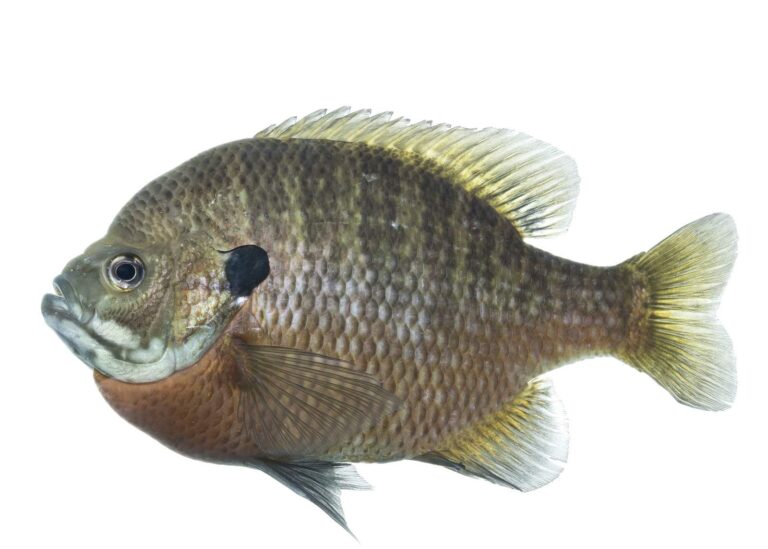
Photo: USFWS Mountain-Prairie, Public domain
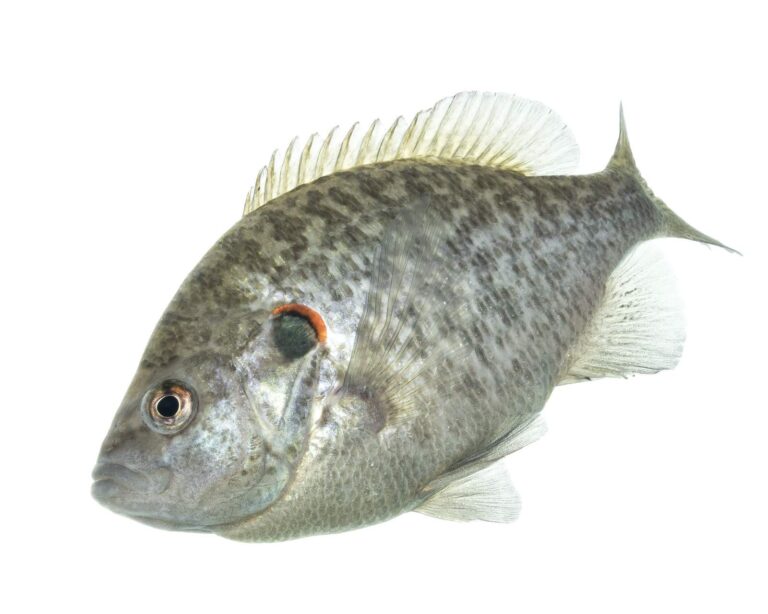
Photo: USFWS Mountain-Prairie, Public domain
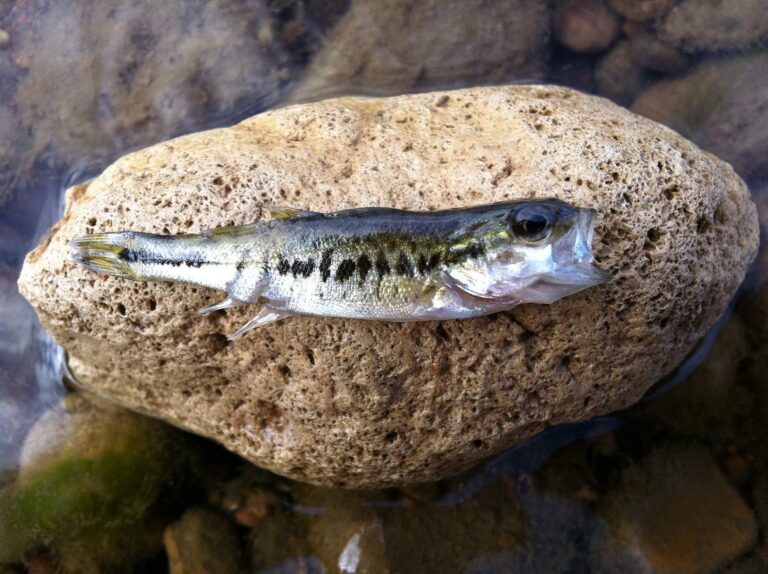
Photo: kmitschke, CC BY 2.0
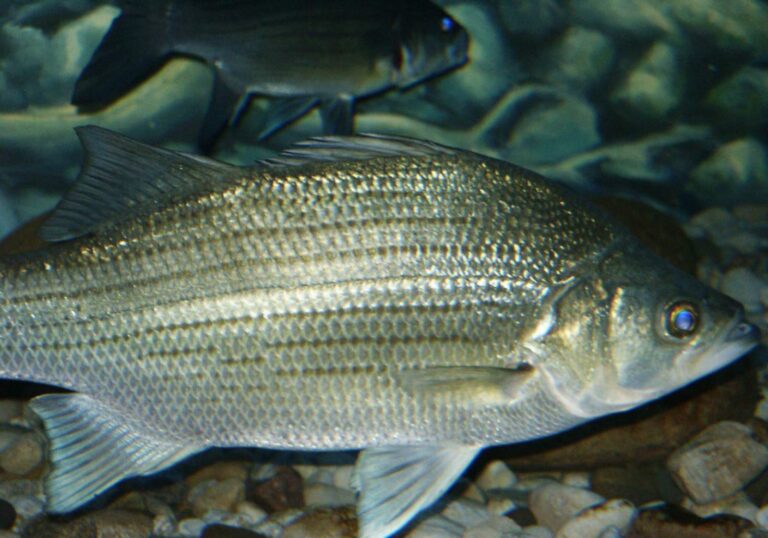
Photo: robposse, CC BY 2.0
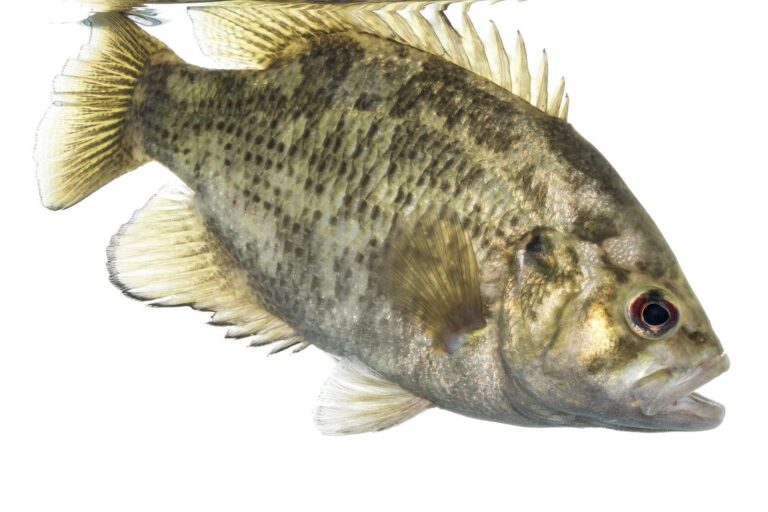
Photo: USFWS Mountain-Prairie, Public domain
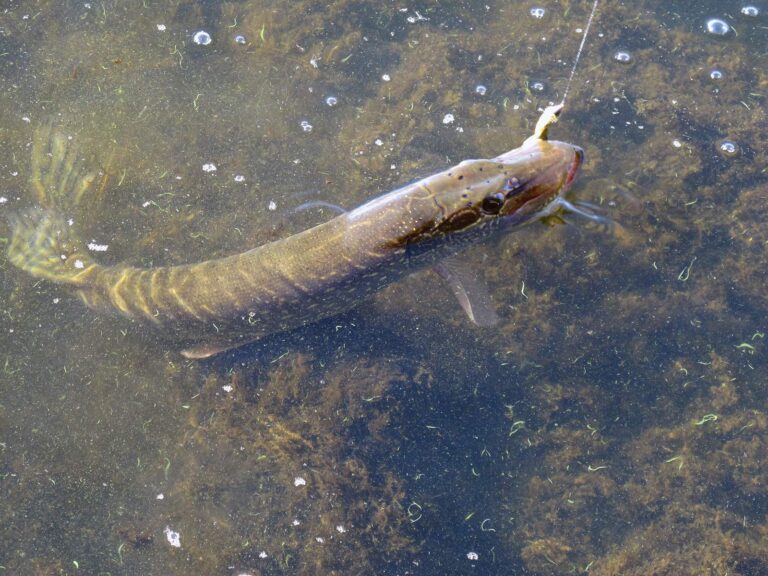
Photo: Argyleist, CC BY 2.0

Photo: USFWS Mountain-Prairie, CC BY 2.0
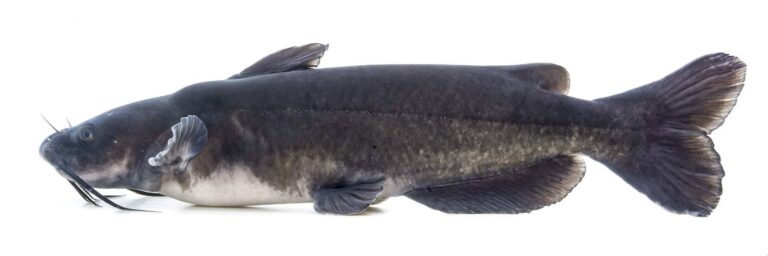
Photo: USFWS Mountain-Prairie, Public domain
Indiana license and limit questions
Which anglers must buy an Indiana fishing license?
Anyone 18 or older fishing public water, resident or not, unless an exemption applies; residents born before April 1, 1943, are exempt.
How much is an Indiana fishing license?
$23 a year for residents and $60 for nonresidents; a one-day license is $10 for residents and $15 for nonresidents and includes trout and salmon; nonresidents can buy a seven-day license for $35.
Do kids need a license to fish in Indiana?
No. Residents and nonresidents under 18 are exempt from the license and the trout/salmon stamp.
When does an Indiana fishing license expire?
Annual licenses and stamps run from April 1 through March 31 of the next year.
Is a separate stamp needed for trout or salmon in Indiana?
Yes. Fishing for or taking trout or salmon needs the $11 trout/salmon stamp with a fishing license; the one-day license already includes it.
How many bass can I keep from an Indiana lake?
Five in any combination of largemouth, smallmouth and spotted bass, 14 inches or longer, unless a special regulation water says otherwise.
What is the Indiana bass rule on rivers?
Five combined, with no fish 12 to 15 inches kept and no more than two over 15 inches; rivers and streams in the 13 Ohio River counties use a 12-inch minimum instead (Blue River in Crawford, Harrison and Washington counties (slot limit applies)).
What size must a walleye be in Indiana?
14 inches south of State Road 26 and 16 inches north of it, with lake exceptions listed in the guide; sauger and saugeye have no size limit.
How many northern pike may I keep?
3; size: 24 inches; no more than one 30 inches or longer.
How long must an Indiana muskellunge be to keep?
1 muskellunge or 1 tiger muskellunge, 36 inches, with 44 inches at Backwater, Kiser and Webster lakes.