Tennessee Fishing License and Regulations
Prices, the statewide creel chart and where to find reservoir and trout rules, from TWRA.
Do I need a fishing license? Check any state
Pick the state, your age and where you will fish. Most states require a license from age 16; a few start at 12, 14, 17 or 18.
From each state's license and regulations page on this site, which quotes the state wildlife agency's fishing guide (checked 15 Nov 2026). Special waters, trout, salmon and saltwater can need extra permits.
 For weighing a catchPiscifun Lip gripper with digital scale27% OFFSale $39.99
Photo of Dandridge: Warren LeMay, CC BY-SA 2.0
Tennessee fishing rules and license prices for 2026-27
TWRA publishes the 2026-27 Tennessee Fishing Guide online; its statewide limits page was last updated September 15, 2026. The guide prints no single effective date, so each rule here carries the date its own page shows.
No license is required for ages 12 and under, some permits may still apply. (License Fees page) All annual licenses are valid for one (1) year from date of purchase, unless noted on the license. All license and permit fees are subject to change. (License Information page)
TWRA rules from the online 2026-27 Tennessee Fishing Guide (guide page), page last updated September 15, 2026, read November 18, 2026.
Fishing gear on sale today, up to 55% off
 Round reel55% offBiggest drop
Piscifun Chaos XS round baitcaster
22 lb carbon drag, 6+1 bearings and a 5.3:1 gear ratio.
 Spinning reel53% off
Piscifun Carbon Prism spinning reel
The 2000 size weighs 7.2 oz with 10+1 bearings and 22 lb of carbon drag.
 Line spooler53% off
Piscifun fishing line spooler kit
Puts new line on spinning and baitcasting reels.
 Metal reel53% off
Piscifun AlumiX spinning reel
Full aluminum body and frame with a carbon fiber drag.
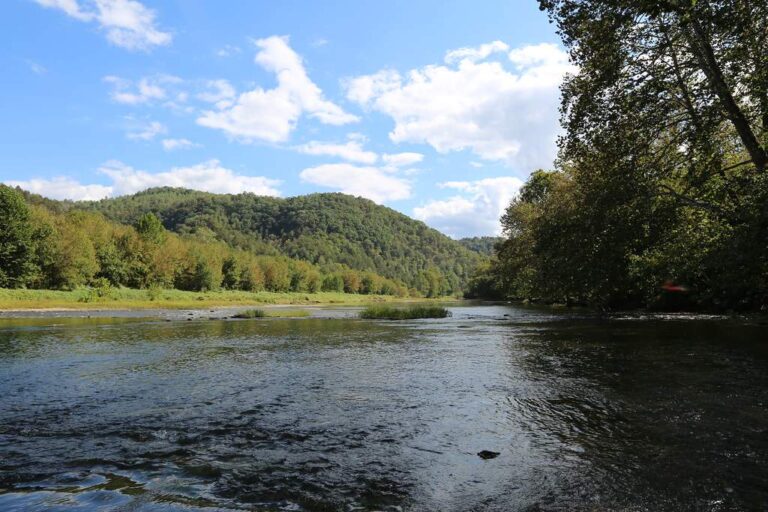
Photo of Clinch River: U.S. Fish and Wildlife Service Northeast Region, Public domain
What a Tennessee resident pays to fish
| License | Term | Price | Notes as printed |
|---|---|---|---|
| Junior Hunt/Fish/Trap ages 13–15 | annual | $9 | Valid for hunting, trapping, and sport fishing. Must be purchased prior to 16th birthday. No supplemental licenses are required, but WMA big game permits will n |
| 1-Day Fishing No Trout; ages 13–64 | 1-day | $6 | |
| 1-Day Fishing All Species includes trout; ages 16–64 | 1-day | $11 | |
| Combo Hunt/Fish ages 16–64 | annual | $33 | Minimum license required to fish and/or hunt small game. |
| Annual Trout Supplemental | annual | $21 | This license allows an angler to fish for trout. This license must be purchased with either the combo hunt/fish, county of residence license or the one-day fish |
| County of Residence Fishing – No Trout ages 13 and over | annual | $10 | This license allows an angler to fish in their county of residence with natural bait (worms, crickets, cut bait, corn, etc.), but not minnows. No artificial bai |
| Annual Senior Citizen Hunt/Fish/Trap | annual | $4 | Available at all license agents and can only be purchased on or after the customer’s 65th birthday. A valid Tennessee driver’s license or proof of age and resid |
| Permanent Senior Citizen Hunt/Fish/Trap | lifetime | $49 | Available at all license agents and can only be purchased on or after the customer’s 65th birthday. A valid Tennessee driver’s license or proof of age and resid |
| Annual Sportsman ages 16–64 | annual | $165 | An all-inclusive license valid for hunting, trapping, and sport fishing without any TWRA supplemental licenses or non-quota permits; allows holders to apply for |
| Senior Sportsman ages 65+ | $49 | An all-inclusive license valid for hunting, trapping, and sport fishing without any TWRA supplemental licenses or non-quota permits; allows holders to apply for | |
| Lifetime Sportsman: Infant (Under 3 years) | lifetime | $320 | |
| Lifetime Sportsman: Toddler (Ages 3–6) | lifetime | $659 | |
| Lifetime Sportsman: Youth (Ages 7–12) | lifetime | $988 | |
| Lifetime Sportsman: Adult (Ages 13–50) | lifetime | $1,976 | |
| Lifetime Sportsman: Older Adult (Ages 51–64) | lifetime | $1,153 | |
| Lifetime Sportsman: Senior (Ages 65 & over) | lifetime | $329 | |
| Lifetime Sportsman: Adopted Child Lifetime license available for children under 13. | lifetime | $320 |
Any Tennessee resident born after January 1, 1989, must show the TWRA-issued wallet Boating Safety Education Certificate as proof of successful completion of the TWRA Boating Safety exam. Any NASBLA approved certificates will be accepted as meeting the requirements of the law. The Tennessee mandatory boating education law is similar to the driver’s license law. You acquire the study materials, study, and then take an approved boating safety exam administered by an approved representative of the TWRA or online through the Tennessee Wildlife Resources Agency website. The certification is not required if there is an adult (18 years old or older) on board to take immediate control of the vessel. However, this adult, if born after January 1, 1989, must have the boating education certification.
Buy online at Go Outdoors Tennessee or from a license agent.
License prices from TWRA (license page), read November 18, 2026.
Out-of-state anglers and Tennessee licenses
| License | Term | Price | Notes as printed |
|---|---|---|---|
| Annual Junior Hunt/Fish (No Big Game) | annual | $10 | Required for nonresidents ages 13–15 to fish or hunt small game. A 7-Day Junior ALL Game or Junior ALL Game Annual is required to hunt big game. |
| Annual Fishing—No Trout, Age 16 and over. | annual | $49 | |
| 3-Day Fishing—No Trout, Age 16 and over. | 3-day | $20 | |
| 3-Day Fishing—All Species, includes Trout, Age 16 and over. | 3-day | $40 | |
| 10-Day Fishing—No Trout. | 10-day | $30 | |
| 10-Day Fishing—All Species, includes Trout, Age 16 and over. | 10-day | $61 | |
| Annual Fishing—All Species, includes Trout, Age 16 and over. | annual | $98 | Apprentice Hunter Education Permit |
Nonresidents who were born in Tennessee may apply for Native Tennessean annual licenses. These licenses provide nonresidents born in the state but no longer residing in the state, the opportunity to purchase annual Tennessee hunting/fishing/trapping licenses at the same cost as residents. Available by application only. Find details and apply online through the Tennessee Wildlife Resources Agency website.
License prices from TWRA (license page), read November 18, 2026.
Daily creel and minimum sizes across Tennessee
| Species as printed | Where | Daily creel | Minimum size |
|---|---|---|---|
| Black Bass (includes Largemouth, Smallmouth, Spotted, Alabama, Coosa and all hybrids) | Statewide | 5 | none |
| Crappie (all species combined) | Statewide | 15 | 10 inches |
| Crappie (all species combined) | TWRA Region 1 (West Tennessee), unless otherwise noted for specific waters | 30 | none |
| Rock Bass or Redeye and Shadow Bass | Statewide | 20 | none |
| Striped Bass or Hybrid Striped Bass (any combination) | Statewide | 2 | 15 inches |
| White Bass | Statewide | 15 | none |
| Muskellunge | Statewide | 1 | 36 inches |
| Sauger or Sauger/Walleye hybrids | Statewide | 10 | 15 inches |
| Walleye | Statewide | 5 | 16 inches |
| Trout (all trout species combined) | Statewide | 7 | none |
| Lake Trout | Statewide | Only 2 trout may be Lake Trout. | none |
| Redear Sunfish (Shellcracker) | Statewide | 20 | none |
| Yellow Bass, Bluegill, Warmouth, Bream, Bullheads, Pickerel, Northern Pike, Yellow Perch, and nongame species | Statewide | no limit | none |
| Skipjack Herring | Statewide | 100 | none |
- Alligator GarNo harvest allowed. Must be returned to water immediately.
- CatfishOnly one (1) catfish over 34 inches may be harvested per day. No harvest limit on catfish less than 34 inches.
- PaddlefishPaddlefish may be harvested from April 24 through May 31. Daily creel limit is two (2) fish per day with no size limit. Culling is prohibited. For exceptions on Center Hill, Cherokee, and Watts Bar reservoirs, see Reservoir Regulations.
- Shovelnose SturgeonNo harvest allowed. Must be returned to water immediately.
Possession Limits are twice the daily creel limit. You may not have more than the daily creel limit with you while afield. It is unlawful to have, while afield, any fish which has been altered so that its species and/or total body length cannot be determined.
Lay the fish on a flat ruler, close the mouth, and squeeze the lobes of the tail fin to produce the maximum length. The mouth of the fish may not be manipulated or extended.
Pole or Rod Limit means the number of lines actively used (baited or deployed in the water) by an angler at any one (1) time. Unless otherwise noted in this guide or by proclamation, there is no limit on the number of poles an angler may use at one (1) time.
TWRA creel chart from the online 2026-27 Tennessee Fishing Guide (guide page), page last updated September 15, 2026, read November 18, 2026.
The rest of the Tennessee rules, page by page
- Reservoir and water rules122 named waters with their own limits
- Trout rulestailwaters, delayed harvest and wild trout streams
- Border water agreementswhich out-of-state licenses work on shared water
- Free fishing daythe license-free Saturday in June
- Family fishing lakesTWRA-owned lakes with their own permit
- Community fishing waterscity ponds with their own catfish rule
- Protected fishfish no one may take
Rules that changed from the 2025 guide
| Rule | 2025 wording | 2026-27 wording |
|---|---|---|
| Pole or Rod Limit definition | "There is no limit on the number of poles an angler may fish at one (1) time." | Defined as the number of lines actively used (baited or deployed in the water) at one time; no limit on poles an angler may use. |
| Montgomery Bell State Park — Woodhaven Lake, Black Bass | 10 per day, 18–25 inch PLR, only one fish longer than 25 inches may be harvested. | Catch and release only. |
| Big Hill Pond State Park — Travis McNatt Lake, Black Bass | No creel limit, only one fish longer than 16 inches may be harvested. | Catch and release only. |
| Catoosa WMA fishing access | Streams and ponds open April 1–Dec. 31, except during managed big game and turkey hunts. | Streams and ponds open to fishing except during deer hunts and wild hog control seasons (no fixed date range; turkey-hunt closure dropped). |
| Kentucky reciprocal waters | "Kentucky (Pending KY Approval)" — Dale Hollow Lake, Kentucky Lake, and Big South Fork agreements listed as anticipated to be resolved by early 2026, no boundar | Agreement finalized. Specific reciprocal boundaries now defined: Big South Fork (Leatherwood Ford Bridge to KY 92 bridge at Yamacraw), Dale Hollow Lake (Wolf River arm/Illwill Creek embayment), Kentuc |
| Big Soddy Creek, delayed harvest season | Catch-and-release season Oct. 1–Feb. 28. | Catch-and-release season Nov. 1–Feb. 28 (start pushed back one month). |
| Piney River, delayed harvest area | Listed as a delayed harvest area, catch-and-release Nov. 1–Feb. 28. | Delayed harvest designation removed entirely; no longer listed on this page. |
| Herb Parsons Lake naming/designation | Listed as "Herb Parsons Lake." | Proclaimed "Herb Parsons Refuge and Bill Dance Lake State Fishing Area." |
TWRA change list from the online 2026-27 Tennessee Fishing Guide (guide page), page last updated September 15, 2026, read November 18, 2026.
Tennessee fishing laws that apply everywhere
- Under no circumstance shall live fish, crayfish or salamanders be intentionally released or stocked into Tennessee waters away from the waters from which they were harvested.
- Explosives, chemicals, and electrical shocking devices are strictly forbidden, and their use carries heavy penalties.
- Shooting with any type of firearm or air gun to injure or take fish or turtles is prohibited.
- All boaters and passengers must wear a Coast Guard approved life jacket within the area designated and appropriately marked as a hazardous area below any dam and/or lock.
- It is illegal to take any fish, crayfish, salamander, or turtle that is listed as endangered, threatened, or in-need-of-management.
- It is illegal to sell or offer to sell fish or turtles without a commercial fishing license.
- Bait: Any living or dead organism, or prepared substance designed to attract fish by taste or odor. For the purpose of this proclamation bait includes, but is not limited to, fish, fish eggs, crayfish, worms, grubs, crickets, corn, cheese, bread, pork rinds, putty or paste-type products, and flavors
- Culling: The removal of a fish from the creel limit and replacing it with another fish of the same species. The released fish must be a live, healthy specimen which should be expected to survive once it is returned to its natural environment.
- Gigging: The taking of fish by means of a hand-held pole or spear with a tip consisting of a single, sharpened point or one (1) or more sharpened barbed points. This includes, but is not limited to gear known as the Hawaiian sling.
- Single hook: A hook with only one (1) point.
TWRA basic laws from the online 2026-27 Tennessee Fishing Guide (guide page), page last updated September 11, 2026, read November 18, 2026.
Tennessee licenses and rules, answered
Who needs a fishing license in Tennessee?
No license is required for ages 12 and under, some permits may still apply. (License Fees page)
How long is a Tennessee annual license good for?
All annual licenses are valid for one (1) year from date of purchase, unless noted on the license. All license and permit fees are subject to change. (License Information page)
Where do I buy a Tennessee fishing license?
Online through Go Outdoors Tennessee, by phone or app, or at a license agent.
Do I need a trout license?
Yes for trout: TWRA sells a trout privilege, and some combination licenses include it. See the price tables above.
What is the black bass limit in Tennessee?
Five per day in any combination statewide, unless a reservoir entry says otherwise.
What is the crappie limit?
15 a day with a 10-inch minimum statewide, and 30 with no minimum in West Tennessee (TWRA Region 1) unless a water says otherwise.
Is there a catfish limit?
Only one (1) catfish over 34 inches may be harvested per day. No harvest limit on catfish less than 34 inches.
Can I fish with more than one rod?
Pole or Rod Limit means the number of lines actively used (baited or deployed in the water) by an angler at any one (1) time. Unless otherwise noted in this guide or by proclamation, there is no limit on the number of poles an angler may use at one (1) time.
When was the guide last updated?
The statewide limits page shows September 15, 2026; other pages carry their own dates between September and November 2026.